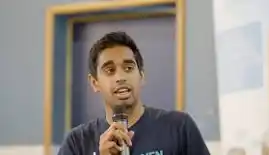
Patrick & John Collison
Irish Teenagers Who Rebuilt Internet Payments
The lab's read
Solve boring problems beautifully
Stripe predates the current AI cycle, but it remains the reference case for what developer-first infrastructure compounds into. Two teenagers with no finance background repriced an industry the incumbents considered finished, mostly by treating integration pain as the product. Every AI tooling company pitching picks-and-shovels today is implicitly being compared to this file.
Prodigies from Rural Ireland
Patrick Collison was born in 1988 in Dromineer, a tiny village in County Tipperary, Ireland. His brother John followed in 1990. Their parents, a microbiologist and an electronic engineer, filled their home with curiosity.
At 10 years old, Patrick taught himself to program from a textbook he bought at an Eason's bookshop in Limerick. At 16, he won Ireland's Young Scientist of the Year for his work on the programming language Lisp. He took the SAT at 13.
John scored the highest-ever marks on the Irish Leaving Certificate exam. Both brothers were operating on a different level.
It all started from a textbook on computer programming. I was 10 years old, and something about the logic of it just clicked.
Millionaires at 17 and 19
In 2007, while Patrick was at MIT and John was finishing high school, they started Shuppa, a software company in Limerick. When Enterprise Ireland declined to fund them, they applied to Y Combinator instead.
At YC, they merged with two Oxford graduates and rebranded as Auctomatic, a tool to help eBay sellers manage their businesses. On Good Friday 2008, they sold Auctomatic to a Canadian company for a reported $5 million.
Most founders would have coasted after a multi-million dollar exit before 20. The Collisons were just getting started.
Patrick's Age at Exit:
19
John's Age at Exit:
17
The Seven Lines of Code
In early 2010, the brothers were working on various side projects and kept hitting the same wall: accepting payments online was absurdly hard. You needed a merchant account, a payment gateway, SSL certificates, and weeks of integration work.
They asked a simple question: "Why is this so complicated? Why can't you just add a few lines of code and start accepting payments?"
They built a prototype and pitched it to Peter Thiel, co-founder of PayPal itself. Their pitch was audacious: "We're going to increase the GDP of the internet."
// Add payments to any website with 7 lines of code const stripe = require('stripe')('sk_test_...'); const charge = await stripe.charges.create({ amount: 2000, currency: 'usd', source: 'tok_visa', });
Pitching PayPal on Better Payments
In 2010, two Irish brothers in their early twenties pitched Peter Thiel and Elon Musk, co-founders of PayPal, on why their payments system was better.
The pitch happened when Stripe barely existed. Patrick and John had hacked together a prototype while on holiday. But their vision was so clear, and their technical understanding so deep, that Thiel invested on the spot.
They focused obsessively on developers, believing that if they could win over the people who actually implement payments, adoption would follow.
The payments industry was dominated by established players, and many doubted that two young Irish entrepreneurs could disrupt such a complex and regulated sector. Undeterred, Patrick and John pressed on.
Stripe's Ascent
Stripe launched publicly in 2011. Tesla and Cruise were among the first customers. Word spread through the developer community: "This is how payments should work."
The company grew quietly but relentlessly. By 2016, both brothers were billionaires, John was the world's youngest self-made billionaire at 26. Today, Stripe processes hundreds of billions in payments annually for millions of businesses.
Patrick remains CEO, John serves as President. They still work closely together, building what they call "economic infrastructure for the internet."
$95B
Peak Valuation
40+
Countries
$1T+
Annual Volume
What to keep
Solve boring problems beautifully
Payments aren't sexy. But they're essential, and doing them well creates enormous value. The boring infrastructure problems are often the biggest.
Developer experience is a moat
Stripe won by making developers love them. Great documentation, clean APIs, and genuine care for the user experience, even in B2B.
Think in decades
The Collisons didn't build for a quick exit. They built infrastructure that would become more valuable over time. Long-term thinking compounds.
Youth can be an advantage
Not having "industry experience" meant they weren't constrained by how things were supposed to be done. Fresh eyes see problems differently.
Family partnerships can work
Working with family is risky, but when trust is absolute and skills are complementary, it can be a massive advantage.