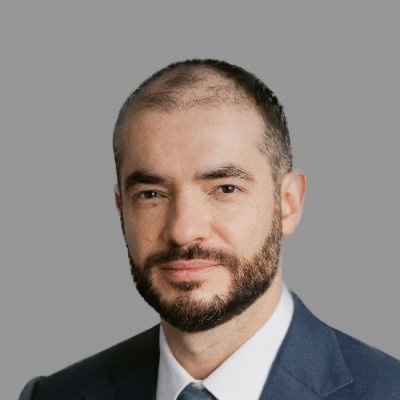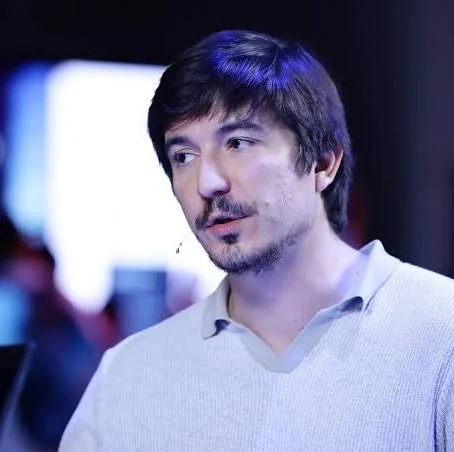
Aravind Srinivas
The Student Who Failed CS Admission and Built a $20B Google Killer
The lab's read
Turn rejection into redirection
Perplexity tests whether search was ever a technology problem or a business model problem. A student rejected from his preferred department assembling OpenAI, DeepMind, and Google Brain experience into a direct challenge to Google suggests the elite labs are training their own competition. Whether a citation-first answer engine can survive contact with advertising economics is the open question this file leaves unresolved.
A Kid in Chennai
Aravind Srinivas grew up in Chennai, Tamil Nadu, in a family more familiar with finance than technology. Choosing engineering was a new step for his family. But from a young age, he was obsessed with problem-solving and mathematics.
That passion led him to pursue engineering at IIT Madras, one of India's most prestigious institutes. But when the results came, Srinivas didn't get into Computer Science, his first choice. He was placed in Electrical Engineering instead.
I was depressed when I failed to get admission in Computer Science at IIT Madras. But this setback turned out to be a blessing in disguise. Electrical engineering provided a strong foundation in the essential concepts for machine learning.
Publishing Before Graduating
Instead of giving up on AI, Srinivas doubled down. IIT Madras was one of the only campuses in India at the time with professors working in AI and machine learning. He sought them out and started doing research.
During his time as an undergraduate, Srinivas published 9 papers in top-tier AI conferences like ICLR, AAAI, and NeurIPS. As an electrical engineering student. This caught the attention of Yoshua Bengio, Turing Award winner and one of the founding fathers of deep learning.
9
Papers Published
NeurIPS
Top AI Conference
Bengio
Wrote His PhD Letter
The Elite Path
With Bengio's recommendation letter, Srinivas applied to only two PhD programs: MIT and Berkeley. He got into Berkeley, where he worked on reinforcement learning, generative models, and representation learning.
After his PhD in 2021, he collected internships and roles at the most elite AI labs in the world: OpenAI, Google Brain, and DeepMind. Each stop taught him what was possible, and what was missing.
At OpenAI and DeepMind, Srinivas saw the raw power of large language models. But he also saw that no one was applying them to the most fundamental problem: search. Google gave you links. What if AI could give you answers?
Launching Weeks Before ChatGPT
In the fall of 2022, Srinivas and his co-founders, Denis Yarats, Johnny Ho, and Andy Konwinski, had been experimenting with an AI tool that would summarize information from multiple websites. They built a prototype using GPT-3.
Then ChatGPT launched. Seven days later, Srinivas and his co-founders debuted Perplexity. They called it an "answer engine", not a search engine. Instead of giving you ten blue links, it gave you the answer directly, with sources.
Google's Model
Here are 10 links. Good luck finding the answer yourself.
Perplexity's Model
Here's the answer, synthesized from multiple sources, with citations.
India's Youngest Billionaire
By September 2025, Perplexity was valued at $20 billion. Investors included Jeff Bezos, Nvidia, and Databricks. The company had become a genuine threat to Google's search monopoly.
In October 2025, Srinivas debuted on the M3M Hurun India Rich List with an estimated net worth of $2.5 billion. At 31 years old, he became India's youngest billionaire.
$20B
Valuation
$2.5B
Net Worth
31
Years Old
What to keep
Rejection is redirection
Srinivas didn't get into CS. That "failure" forced him into electrical engineering, which gave him the mathematical foundations for AI.
Publish your way to credibility
9 papers as an undergrad got Yoshua Bengio to write his PhD letter. Output creates opportunities that credentials alone cannot.
Learn from the best, then leave
OpenAI, DeepMind, Google Brain, Srinivas collected knowledge from elite labs, then applied it to a problem they weren't solving.
Challenge the giants
Google has owned search for 25 years. Perplexity asked: what if search was fundamentally wrong? Don't accept industry assumptions.
Launch fast, even if imperfect
Perplexity launched 7 days after ChatGPT. Timing mattered more than perfection. Get in the arena.