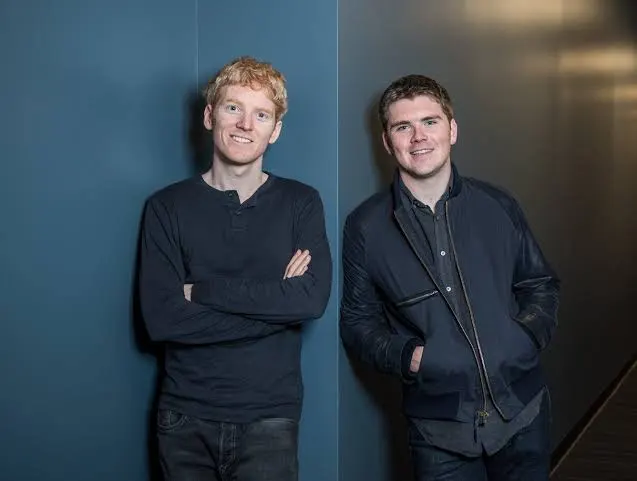
Brian Chesky
From Air Mattresses to a $100 Billion Empire
The lab's read
Do things that don't scale
Airbnb is evidence that market sizing fails precisely where it matters most, at the frontier where behavior has to be created rather than measured. Seven investors passed because the observable market was close to zero, and the company that exists today was built from behavior the data said did not exist. For a lab studying how judgment outperforms consensus, this is the canonical case.
The Origin Story
It was October 2007 in San Francisco. Brian Chesky and Joe Gebbia, two Rhode Island School of Design graduates, were struggling to pay their $1,150 rent. A design conference was coming to town, and every hotel was booked solid.
They had an idea: What if they bought a few air mattresses and rented out floor space in their apartment? They called it "Air Bed & Breakfast" and charged $80 per night, including breakfast.
Three guests showed up. One was a 30-year-old from Boston, another a 35-year-old father of five from Utah, and a 45-year-old woman from India. None of them seemed like the type to sleep on strangers' floors, but they did.
That first weekend, we made about $1,000. But more importantly, we realized something: people would pay to stay with strangers. That was the insight.
Seven Investors Said No
When Chesky and his co-founders (now including Nathan Blecharczyk) joined Y Combinator in 2009, they were desperate. The company was making about $200 a week.
They pitched to every investor who would listen. Seven prominent Silicon Valley investors passed. The feedback was consistent: the market was too small, the idea was too weird, and nobody would ever let strangers sleep in their homes.
To survive, they did something desperate: they bought a bunch of cereal, created custom boxes called "Obama O's" and "Cap'n McCain's" during the 2008 election, and sold them for $40 each. They made $30,000 selling cereal.
Actual Investor Feedback: "The market opportunity is too small". Another Pass: "People will never trust strangers".
Doing Things That Don't Scale
Paul Graham, Y Combinator's co-founder, gave them advice that changed everything: "Go to New York, meet your users, and do whatever it takes to make them love you."
So Chesky and Gebbia flew to New York. They knocked on doors of hosts. They took professional photos of every listing themselves. They sat in living rooms and listened to complaints. They fixed things by hand.
They didn't just talk to users, they lived with them. Chesky would stay with hosts to understand the experience. He'd show up at properties and help hosts optimize their listings. This level of obsession became Airbnb's secret weapon.
This became the famous "do things that don't scale" philosophy. Chesky realized that to build a company that serves millions, you have to start by serving dozens, personally, obsessively, one by one.
The Breakthrough
The New York experiment worked. Bookings started growing 10% week over week. Sequoia Capital finally invested. Then the growth became exponential.
By 2011, Airbnb had 1 million nights booked. By 2012, 10 million. By 2014, they were valued at $10 billion. In December 2020, Airbnb went public at a $47 billion valuation, during a pandemic that had devastated the travel industry.
7M+
Active Listings
220+
Countries
$75B+
Market Cap
What to keep
Embrace being weird
The best ideas often sound crazy at first. If everyone thinks your idea is obviously good, you're probably too late.
Do things that don't scale
Go door to door. Take photos yourself. Call every customer. The unscalable things teach you what needs to scale.
Turn rejection into fuel
Chesky kept every rejection email. He used them as motivation. Every "no" is just data about what you haven't proven yet.
Design matters
Chesky's RISD background influenced everything, from the app's interface to how hosts photograph their spaces. Beauty creates trust.
Crisis reveals opportunity
The Obama O's cereal wasn't just survival, it showed investors their scrappiness. Sometimes desperation breeds innovation.