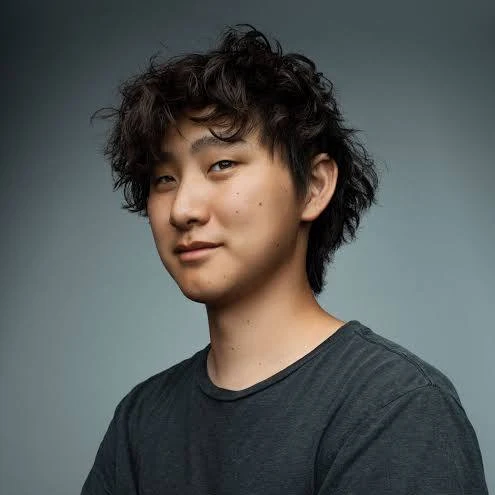
Michael Truell
MIT Dropout Who Built the Fastest-Growing Dev Tool in History
The lab's read
Build what developers actually need
Anysphere is the strongest evidence available that rebuilding a tool around AI beats bolting AI onto an existing one. Four dropouts with no product history outran every incumbent code editor in under three years, which suggests distribution moats matter less when the underlying capability is shifting fast. The open question is whether the same force that created Cursor can displace it just as quickly.
Four MIT Friends
Michael Truell met Sualeh Asif, Arvid Lunnemark, and Aman Sanger as undergraduates at MIT, where they all studied computer science and mathematics. They bonded over late-night hackathons and a shared frustration: existing coding tools weren't keeping up with AI's potential.
Through research at MIT CSAIL, internships at Google, and time in OpenAI's accelerator program, each founder developed deep expertise in AI and machine learning. But they kept coming back to the same question: why is coding still so manual?
We were obsessed with AI's potential to change software development. But existing tools like GitHub Copilot weren't pushing the limits. We realized AI should not just assist coding, it should be the foundation of how developers work.
The Dropout Decision
In 2022, fresh out of MIT, or rather, without finishing MIT, the four co-founders incorporated Anysphere. None of them completed their degrees. They rejected lucrative job offers from tech giants, betting everything on their vision.
The typical path for MIT CS graduates is a $200K+ job at Google or Meta. Instead, Truell and his co-founders moved to San Francisco to build something new. It was a calculated risk: the opportunity cost of staying in school or taking a job felt too high.
"We could always go back to school or get jobs later. But the AI moment was happening now. If we didn't move fast, someone else would build what we saw in our heads."
Building Cursor
Anysphere graduated from OpenAI's accelerator program in 2023 and launched Cursor in March. Cursor wasn't just another VS Code extension, it was a completely rebuilt code editor with AI at its core. Every keystroke, every refactor, every debug session was enhanced by AI.
The product took off immediately. Developers who tried Cursor couldn't go back. By November 2024, Anysphere acquired Supermaven to beef up Cursor's capabilities. The team was moving fast and accumulating talent.
$100M
ARR in 14 months
#1
Fastest SaaS to $100M
$29.3B
Valuation (Nov 2025)
The $2.3 Billion Round
In November 2025, Anysphere raised $2.3 billion in funding, valuing the company at $29.3 billion. It was their second massive round of the year. All four co-founders became billionaires, making them among the youngest self-made billionaires in tech.
The team dynamics were unusual: Truell held the CEO title, but public statements emphasized collective decision-making. This reflected their MIT academic culture and the technical nature of the challenge they were solving.
The Founders:
Michael Truell (CEO), Sualeh Asif (CPO), Arvid Lunnemark (Former CTO), Aman Sanger (COO)
The Bet:
"AI should be the foundation of how developers work", not just a feature bolted onto existing tools.
What to keep
Rebuild from first principles
Cursor isn't a plugin, it's a rebuilt editor. Sometimes you need to throw away the old architecture to build something truly new.
Move when the moment is right
The four founders dropped out at the exact moment AI was becoming powerful enough to change coding. Timing is everything.
Equal partnerships work
Four equal co-founders with complementary skills. Titles mattered less than collective decision-making and shared vision.
Build for power users first
Cursor spread through word of mouth among developers. Build something amazing for experts, and they'll evangelize it.
Opportunity cost is real
They could have finished MIT or taken FAANG jobs. Instead, they became billionaires. Calculate the true cost of not pursuing your idea.