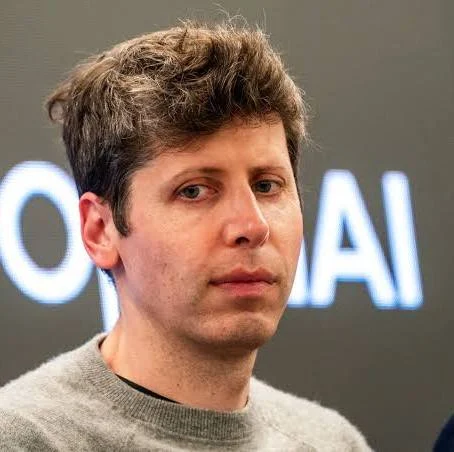
Scott Wu
The Coding Prodigy Who Built the First AI Software Engineer
The lab's read
Master your craft before you scale it
Devin is the most direct test of whether software engineering is a task or a profession. A team holding ten IOI gold medals chose to automate their own discipline, which makes Cognition a cleaner signal about labor substitution than any forecast from outside the field. If the people who win at competitive programming are building their own replacement, the timeline assumptions of everyone else deserve revision.
A Child Prodigy in Louisiana
Scott Wu was born in 1997 in Louisiana to a Chinese immigrant family. He wasn't just good at coding, he was exceptional. He learned to program at nine years old and immediately fell in love with turning ideas into reality.
By his teenage years, Wu was dominating competitive programming. He won three gold medals at the International Olympiad in Informatics (IOI), taking first place in 2014. He also became the individual champion at Mathcounts in 2011.
I first learned to program when I was nine years old and fell in love with the ability to turn my ideas into reality. Competitive programming taught me that the best solutions are often the simplest ones.
The Brother Connection
Scott's older brother Neal Wu is also a programming legend. They've competed together since they were teenagers, pushing each other to new heights. Neal has worked at Facebook, Google Brain, and served as a head teaching fellow at Harvard.
When Scott founded Cognition AI, Neal joined him. The founding team at Cognition collectively holds 10 IOI gold medals, perhaps the most accomplished group of competitive programmers ever assembled at a startup.
3x
IOI Gold Medals
1st
Place IOI 2014
10
Team Gold Medals
Before Devin: Lunchclub
Wu graduated from Harvard in 2019 with a degree in economics, not computer science. His first startup was Lunchclub, an AI-powered networking platform that matched professionals for 1:1 meetings. It was backed by Lightspeed, Coatue, and a16z.
As CTO and co-founder, Wu built the matching algorithms that connected thousands of professionals. Lunchclub proved he could ship products, not just win competitions. But he was already thinking about a bigger problem: what if AI could do the work of a software engineer?
Wu spent his whole life solving coding problems faster than anyone else. Building Devin was the logical next step: teach a machine to solve them too.
Building Devin
In November 2023, Wu co-founded Cognition AI with Steven Hao (CTO) and Walden Yan (CPO). Their vision was audacious: build the first truly autonomous AI software engineer. Not a code completion tool. Not an assistant. An engineer that could take a task and complete it independently.
They raised $21 million from Peter Thiel's Founders Fund to start. By 2025, Cognition had raised over $400 million in a Series C led by Founders Fund, reaching a $10.2 billion valuation. Devin integrates with Slack, Linear, and GitHub, handling real engineering work.
What Devin Does:
Autonomously writes code, creates pull requests, debugs issues, and completes real engineering tasks from natural language prompts.
The Vision:
"It's like this game we've all been playing in our minds for years, and now there's a chance to code it into an AI system."
What to keep
Go deep before going wide
Wu spent over a decade mastering competitive programming before building an AI programmer. Deep expertise creates unique insights.
Build with people who make you better
His brother Neal pushed him in competitions; his co-founders share his competitive programming background. Surround yourself with excellence.
Aim for step-change, not incremental
Devin isn't "better autocomplete", it's an autonomous engineer. The biggest opportunities require reimagining what's possible.
First company is practice
Lunchclub taught Wu how to ship products and lead teams. Your first startup might just be preparation for your real mission.
Solve your own problems
As a programmer, Wu understood exactly what an AI engineer needed to do. Build for problems you understand deeply.